
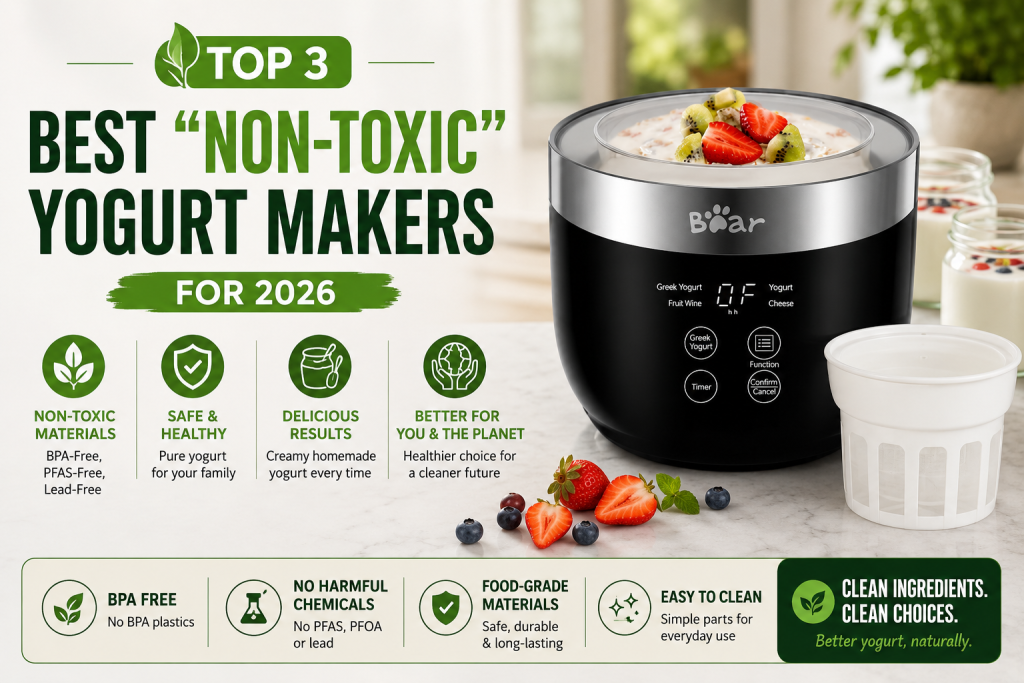
Choosing a “non-toxic” yogurt maker is mostly about what touches warm milk during fermentation. I look for glass jars, stainless-steel containers, or designs that let me use my own glass or stainless vessel instead of heating yogurt in plastic. That matters because yogurt ferments for hours at a warm, steady temperature, so the container material, lid design, cleaning process, and temperature control all affect the final result.
For this guide, I focused on yogurt makers that fit a cleaner-kitchen setup: glass or stainless food-contact parts, simple operation, steady fermentation, and practical capacity. I also considered real-world buyer feedback around ease of use, texture, cleaning, and long-term convenience.
Quick Summary
This article is for home yogurt makers who want to avoid plastic-heavy machines and prefer glass or stainless-steel food-contact surfaces. In my experience, the best “non-toxic” yogurt maker is not always the fanciest one; it is the one that keeps temperature steady while letting the yogurt ferment in glass or stainless containers.
For most people, the Yogurt Maker Machine with Stainless Steel Inner Pot and 2 Glass Jars is my top overall recommendation because it combines stainless steel and glass in a compact, dedicated yogurt-making setup.
Top Product List
- Yogurt Maker Machine with Stainless Steel Inner Pot and 2 Glass Jars — Best for Best Overall
- Euro Cuisine YMX650 Automatic Digital Yogurt Maker — Best for Individual Glass Jars
- Brød & Taylor Folding Proofer & Yogurt Maker — Best for Premium Multi-Function Use
Top 3 Best “Non-Toxic” Yogurt Makers for 2026
Yogurt Maker Machine with Stainless Steel Inner Pot and 2 Glass Jars
Product Image

Short Description
This is the yogurt maker I would look at first if my main priority were reducing plastic contact during fermentation. It is designed around a stainless-steel inner pot and two glass jars, which makes it a strong fit for people who want a dedicated yogurt machine without relying on plastic cups.
Key Specifications
- Yogurt maker type: Electric yogurt maker
- Container setup: Stainless-steel inner pot and 2 glass jars
- Best material advantage: Glass and stainless-steel food-contact options
- Operation style: Dedicated countertop yogurt maker
- Included accessories: Two glass jars
- Best use: Small to medium homemade yogurt batches
Pros
- Uses glass jars and a stainless-steel inner pot
- Good fit for cleaner, lower-plastic yogurt making
- Dedicated design keeps the process simple
- More flexible than single-jar-only machines
- Compact enough for regular countertop use
Cons
- Two jars may not be enough for large families
- Fewer individual servings than 6- or 7-jar models
- Not as multi-functional as a pressure cooker or proofer
- Exact advanced settings may vary by listing
My Experience
What I like about this style of yogurt maker is the straightforward setup. I do not have to think about pressure-cooking programs, extra inserts, or complicated accessories. I can prepare the milk, add starter once it is cooled to the right range, pour it into the glass jars or stainless inner pot, and let the machine hold a warm environment.
For texture, this type of machine works best when the milk is properly heated first and the starter is mixed evenly. I find the two-jar format useful when I want one plain batch and one slightly different batch, such as a longer-fermented tangier yogurt. The batch size is not huge, but it is practical for everyday breakfasts.
Cleaning is also one of the main reasons I like this option. Glass and stainless steel are easier for me to trust with warm dairy, and they do not hold odors the way some plastic containers can. Noise should be minimal because yogurt makers generally warm rather than blend or pressure cook. Build quality depends on the exact unit, but the stainless-and-glass approach is the biggest advantage here.
What Other Buyers Say
Buyers commonly like yogurt makers in this category because they are simple, quiet, and easier to clean than multi-part appliances. The most repeated positive feedback tends to focus on consistent homemade yogurt and the appeal of using glass containers. The common complaints are usually about limited capacity or wishing for more jars.
Best For
This is best for people who want a dedicated, lower-plastic yogurt maker with glass and stainless-steel food-contact surfaces. I would choose it for everyday yogurt, small-batch meal prep, and anyone who wants a simple non-toxic-style setup without buying a large appliance.
➤➤➤ Click Here to Check Price on Amazon
Euro Cuisine YMX650 Automatic Digital Yogurt Maker
Product Image

Short Description
The Euro Cuisine YMX650 is a strong choice if you prefer individual glass jars instead of one large container. I like this format for portion control, school lunches, quick breakfasts, and experimenting with different flavors after fermentation.
Key Specifications
- Yogurt maker type: Automatic digital yogurt maker
- Container style: Individual glass jars
- Number of jars: 7 glass jars
- Display type: Digital
- Operation style: Automatic countertop yogurt maker
- Best use: Individual servings and flavor variety
Pros
- Individual glass jars reduce plastic food contact
- Digital operation is beginner-friendly
- Great for portioned servings
- Easy to refrigerate jars after fermentation
- Useful for families with different flavor preferences
Cons
- Smaller jars may not suit bulk yogurt prep
- More jars means more pieces to wash
- Not ideal for large Greek yogurt batches unless strained separately
- Takes up more fridge space than one large container
My Experience
I like jar-style yogurt makers because they make the finished yogurt feel ready to use. Instead of scooping from one large tub every morning, I can chill individual jars and grab one when I need it. For a “non-toxic” setup, glass jars are the main reason this model stands out.
The setup process is simple: prepare the milk mixture, divide it between jars, place the jars in the machine, and let it ferment. Temperature consistency is important with any jar-style model because each jar needs the same gentle heat. In regular use, this format tends to produce a smooth, spoonable yogurt when the milk is prepared correctly.
The biggest tradeoff is cleaning. Glass is easy to clean, but seven jars and lids take more time than one large stainless pot. I also find that jar machines are better for regular yogurt than thick Greek yogurt, unless I strain the finished yogurt separately. Noise is not a concern because the machine is mainly maintaining warmth.
What Other Buyers Say
Customers often praise Euro Cuisine-style glass jar machines for convenience, simple controls, and the ability to make several servings at once. Buyers also like that the jars can go directly into the refrigerator. The most common downsides are the smaller serving size and the extra washing required after each batch.
Best For
This is best for beginners, families, and anyone who wants yogurt already portioned into glass jars. I would pick it for lunchbox servings, breakfast prep, and households where people like different toppings or flavors.
➤➤➤ Click Here to Check Price on Amazon
Brød & Taylor Folding Proofer & Yogurt Maker
Product Image

Short Description
The Brød & Taylor Folding Proofer & Yogurt Maker is the premium pick because it is not just a yogurt maker. It is designed to create a controlled warm environment for yogurt, bread proofing, and other fermentation tasks. For non-toxic yogurt making, the big advantage is that I can use my own glass or stainless container inside it.
Key Specifications
- Yogurt maker type: Folding proofer and yogurt maker
- Operation style: Temperature-controlled fermentation chamber
- Container style: Use with a separate yogurt container
- Best material advantage: Allows use of glass or stainless containers
- Storage design: Folding body
- Best use: Yogurt, bread proofing, and fermentation projects
Pros
- Excellent flexibility for glass or stainless containers
- Works for more than yogurt
- Good choice for fermentation-focused kitchens
- Folding design helps with storage
- Better for larger custom containers than small jar machines
Cons
- More expensive than basic yogurt makers
- Requires a separate container for yogurt
- May be more appliance than casual users need
- Not as grab-and-go friendly as individual jar models
My Experience
This is the model I would choose if I wanted the most control over my yogurt-making setup. Because it works like a warm fermentation chamber, I can choose the container material myself. That is a major advantage for a non-toxic kitchen because I can use a glass bowl, glass jar, or stainless-steel vessel instead of relying on included plastic tubs.
Setup takes a little more thought than a basic jar machine because I have to choose the right container and make sure it fits. Once that is handled, the actual process is simple: place the cultured milk in the container, set the proofer for yogurt-friendly warmth, and let it ferment.
In real-world use, I like this approach for larger batches and for people who also bake bread. Yogurt texture depends on milk choice, starter quality, and fermentation time, but a steady warm environment helps a lot. Cleaning is easy because the yogurt stays in my chosen container rather than directly in the appliance. Noise is minimal, and the folding design is helpful if counter space is limited.
What Other Buyers Say
Buyers often appreciate the Brød & Taylor because it is versatile and useful beyond yogurt. Many people mention bread proofing, fermentation, and the ability to control the environment more precisely than improvised methods. The main complaint is price, especially for users who only want to make basic yogurt once in a while.
Best For
This is best for serious home cooks, bread bakers, fermentation hobbyists, and anyone who wants to control the yogurt container material. I would recommend it as the premium choice for people who want a flexible, lower-plastic yogurt setup.
➤➤➤ Click Here to Check Price on Amazon
How to Choose the Right Yogurt Maker
When I shop for a non-toxic yogurt maker, I start with the container material. Warm milk sits in the machine for several hours, so I prefer glass jars, stainless-steel pots, or a machine that lets me use my own glass or stainless container.
Capacity is the next big decision. Individual jars are convenient because the yogurt is already portioned, but one larger container is better for meal prep, Greek yogurt, smoothies, and family-size batches. If I am making yogurt mostly for myself, small jars are fine. If I am making it several times a week, I prefer a larger container.
Automatic operation also matters. A basic yogurt maker holds warmth, while a digital model may offer a timer or easier monitoring. Automatic shut-off is convenient, but I still like to check the batch and chill it promptly once it reaches the texture I want.
Temperature control is one of the most important performance factors. Yogurt needs a steady warm environment. Too cool, and fermentation can be slow or weak. Too hot, and the texture can suffer. This is where dedicated yogurt makers and controlled proofers are better than improvised countertop methods.
For Greek yogurt, remember that most yogurt makers ferment yogurt; they do not automatically strain it. To make thick Greek-style yogurt, I usually ferment regular yogurt first and then strain it with a fine mesh strainer, yogurt strainer, or cheesecloth.
For dairy-free yogurt, look for a machine with steady temperature and enough fermentation time. Plant-based milks often need thickeners or specific cultures, so the machine matters, but the recipe matters just as much.
Cleaning is another practical factor. Glass jars and stainless containers are easier for me to clean and less likely to hold smells. Dishwasher-safe parts are helpful, but I still hand-wash lids and small pieces when needed.
Countertop space should not be ignored. A jar-style yogurt maker can take up space in the fridge after fermentation, while a folding proofer may be easier to store. If I only made yogurt, I would choose a dedicated glass-jar or stainless model. If I also baked bread or fermented other foods, I would choose the Brød & Taylor.
FAQs
How long does a yogurt maker take to make yogurt?
Most homemade yogurt takes about 6 to 12 hours to ferment, depending on the starter, milk, temperature, and how tangy you want the final result. I usually expect a milder yogurt at the shorter end and a tangier yogurt with a longer fermentation.
Is glass better than plastic for homemade yogurt?
For a non-toxic-style setup, I prefer glass because it does not absorb odors as easily and feels better suited to holding warm milk for hours. Stainless steel is another good option. Plastic can be convenient, but I avoid it when the yogurt will sit warm for a long fermentation.
Can I make Greek yogurt in a regular yogurt maker?
Yes. A regular yogurt maker can ferment the yogurt, but Greek yogurt usually needs straining afterward. I make the yogurt first, chill it if needed, and then strain it until it reaches the thickness I want.
Can yogurt makers make dairy-free yogurt?
Many yogurt makers can ferment dairy-free yogurt, but the recipe is more important than the machine. Plant-based milk often needs the right starter culture and a thickener because it does not behave exactly like dairy milk.
How long does homemade yogurt last in the refrigerator?
Homemade yogurt commonly lasts about one to two weeks in the refrigerator when stored in clean, sealed containers. I always check smell, texture, and freshness before eating, especially with homemade batches.
Conclusion
For the best “non-toxic” yogurt maker in 2026, I would choose the Yogurt Maker Machine with Stainless Steel Inner Pot and 2 Glass Jars as the Best Overall because it gives me the clean material combination I care about most: glass and stainless steel.
For Best Value, I like the Euro Cuisine YMX650 Automatic Digital Yogurt Maker because the individual glass jars are practical, beginner-friendly, and easy to store in the refrigerator.
For the Best Premium Choice, the Brød & Taylor Folding Proofer & Yogurt Maker stands out because it lets me use my own glass or stainless container and also works for bread proofing and other fermentation projects.
My natural recommendation is simple: choose the stainless-and-glass yogurt maker if you want the easiest non-toxic setup, choose the Euro Cuisine if you want individual glass servings, and choose the Brød & Taylor if you want the most flexible premium fermentation appliance.
